No products in the cart.
I am writing this post on the way home from a funeral in Massachusetts. That’s not a beekeeping activity. Normally. But this time it was. Very much.
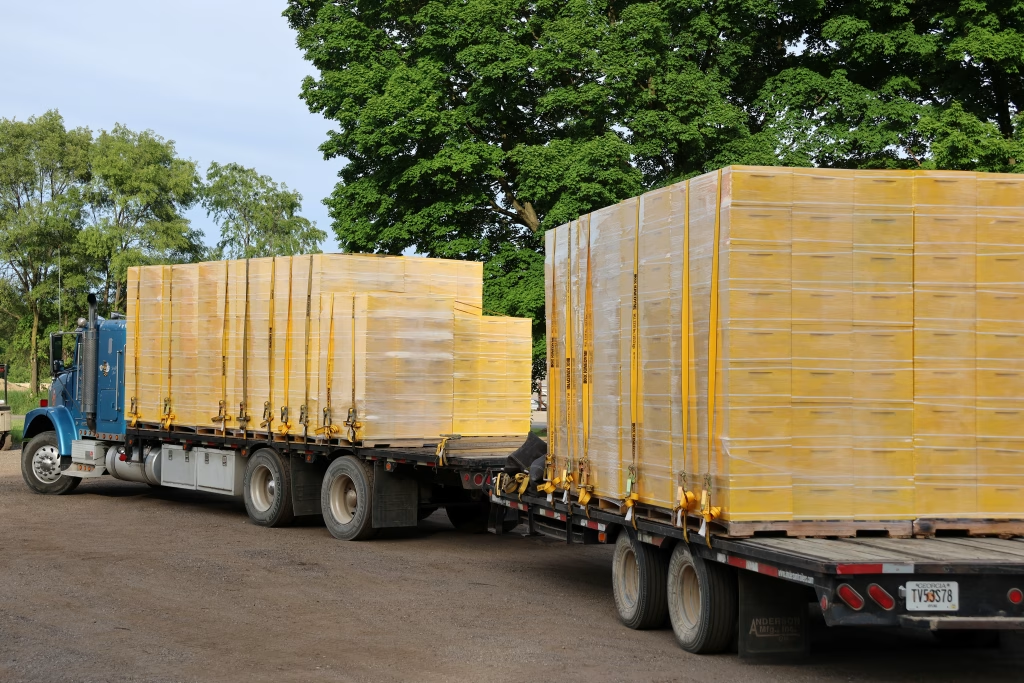
William Donaldson Crawford III, a commercial beekeeper better known as Billy C. of Southwick, Massachusetts, was seriously injured while unloading bees and died a day later. He was unloading bees into basswood and soybean yards by the side of a road in northwestern Ohio. It was 2:00 Wednesday morning, June 4th, when a 20-year-old in a pickup came “out of nowhere”, hit his Swinger forklift in the rear end and rolled into the ditch. Bill sustained severe head injuries and a broken back. 35 years old. Wife and 5 little children. Prime of life. Untimely. Tragic.
Or so we think.
I knew Bill for a number of years. He was at our place Tuesday afternoon to pick up eight pallets of woodenware. The last thing he said was, “Well, you’ll be seeing me around.” We did. Sooner than we thought and in a casket. And we won’t be seeing him around anymore.
We call it tragic. And in many ways, it is. It is not out of place for us to mourn his death, sympathize with his wife and family, and ask why. But we mortals have to remember that we are just that—mortal. We are from dust and return to dust. The old will die and the young may die. We do not know, cannot know the bigger picture and the ultimate, omniscient, and many times, inscrutable ways and purposes of God. And we don’t need to know to accept and believe that God is still good and will redeem what to us looks like tragic situations.
Instead of “telling the bees,” friends and family, beekeepers, and Mennonites from all over the east gathered in Westfield, Massachusetts to lay Bill’s body to rest and consider God’s call on each of our lives. Today it was Bill. Tomorrow it could be us. Are we ready to meet our Maker?
Honey flows are in full swing. By now (in the northern latitudes at least) more nectar is being stored than is being consumed by brood production and the available space in a hive is fast diminishing. It is important to keep enough space on the colony for two reasons. Of course, if everything fills up before the honey flow is over, the bees will quit gathering and you won’t have the surplus to harvest.
But a more subtle thing happens. Because bees make honey gathering a priority, when storage space decreases during a honey flow the bees put nectar in any cell they can find at the expense of brood. This starts shutting the brood down and when this happens, the long range wellbeing of the colony is compromised just like happens during a dearth. This is called “honey bound.” For optimal hive well-being and honey production you need to keep enough space on the hive to keep that condition from developing.
You can know a colony is honey bound when every frame is full (of course) and honey and capped brood are right next to each other in the frames rather than having a zone of uncapped larva at all ages between the two.
Of course, if you let it go too long without adding space a colony will begin building swarm cells and eventually swarm. The remedy is simply: add supers. You won’t be sorry and neither will the bees.
–Jonathan Showalter | Beeline of Michigan
You must be logged in to post a comment.

Paul Beauregard says:
Sorry for your loss. My condolences to you and the family of your friend. This is a terrible tragedy. As you stated we are mortal. We must always be ready to meet our maker and not take any day for granted.
RMBSCO says:
Keeping his family in our thoughts and prayers as they navigate their grief. God bless them always.