
No products in the cart.
Note: This is the third part in a series of posts attempting to answer the question, “Can hobby beekeeping be financially successful?” Be sure to go back and read the March 6th and 11th posts before digesting this one. You can look forward to at least 4 more posts in this series.
In the last two posts we looked at the economics of first year, hobby beekeeping. Three-year ROI (return on investment) is usually considered pretty good. Can that happen with hobby beekeeping? Let’s see.
Again, here are the parameters. Same location. Two hives. This time, one overwintered. One died. (If they both survived, we would really be in good shape. But we have to keep this realistic.) This year, different from the first year, we are going to introduce splitting. I know, I know. This can sound quite scary to newbies. But we aren’t really newbies anymore, consequently we know some things that are essential for splitting. Therefore, we can make splits successfully and enhance our profitability.
This year we are going to purchase only one nuc to fill the dead-out. (We could fill it with a split made off the overwintered hive, but in the long run that will likely push profitability down the road. So, for our numbers we’ll fill the dead-out with a purchased nuc.)
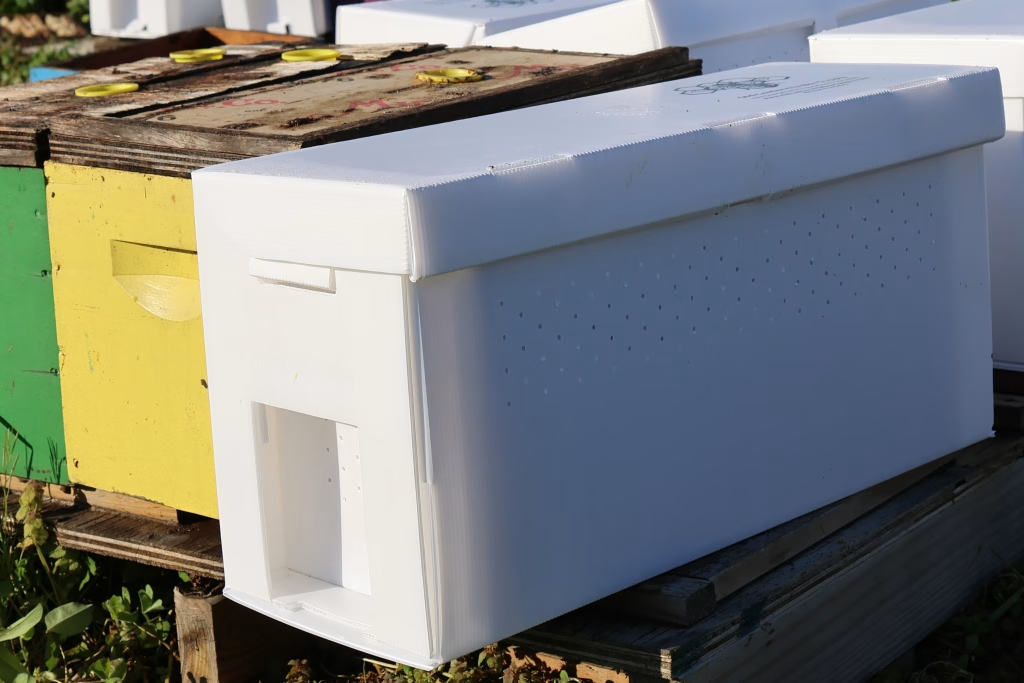
We are also going split the overwintered hive lightly to help control swarming and mitigate losses. Heavy splitting would unnecessarily increase risks.
Most of the rest of the management will run like first year until we get to July. That’s when things will get a lot different, and interesting.
So, here’s the plan of activity starting in January:
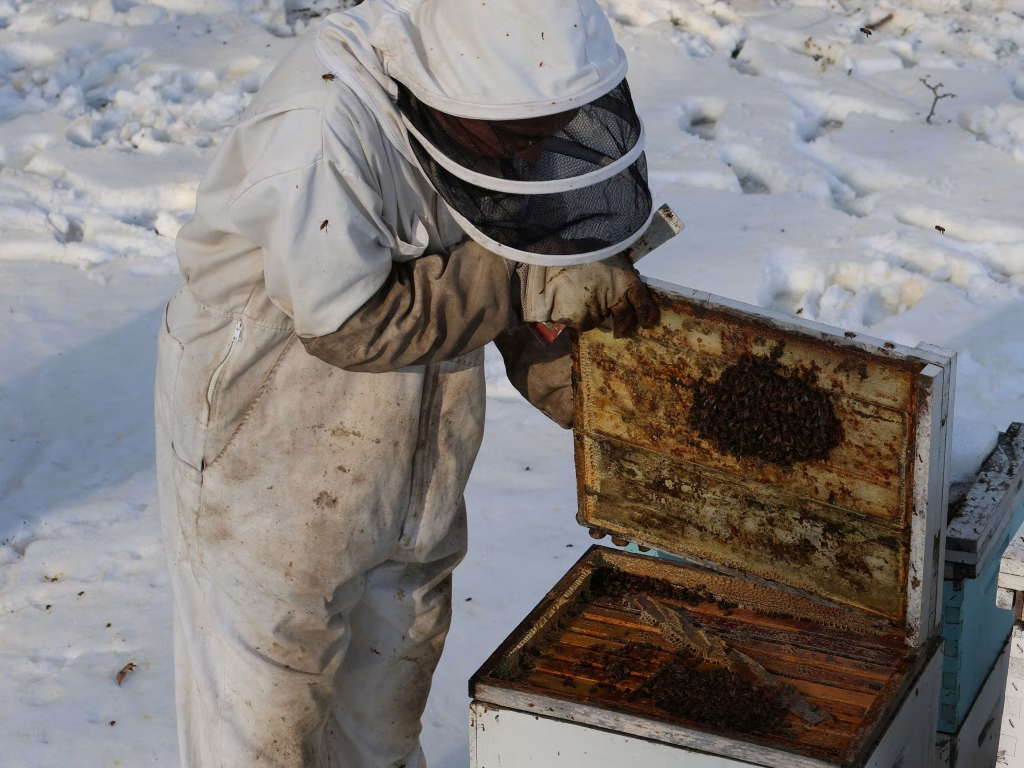
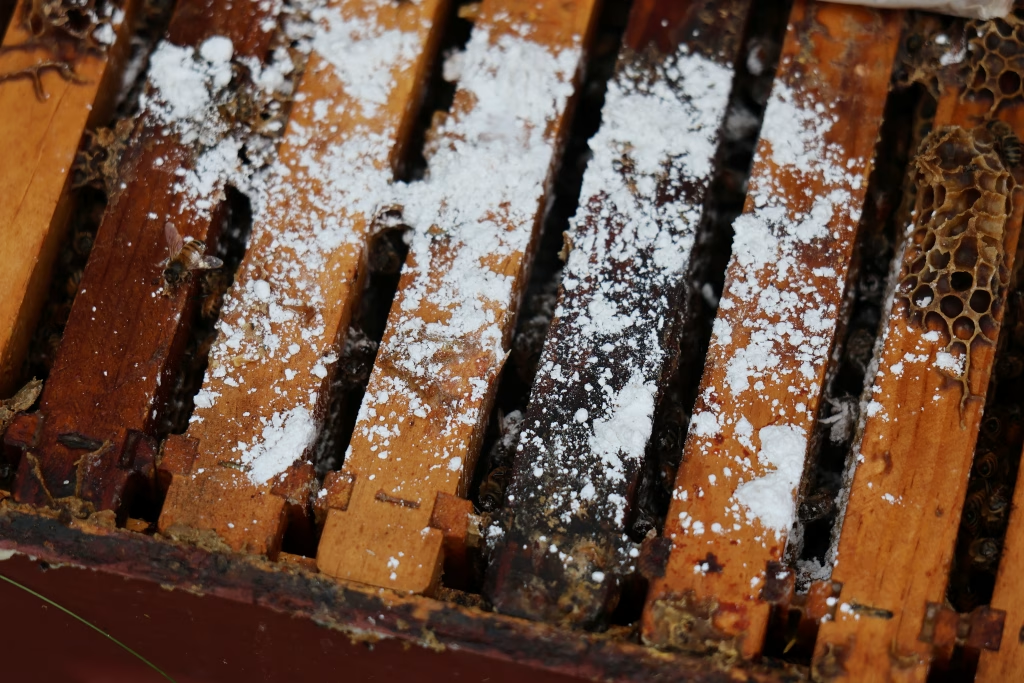
Early January—On a relatively warm and calm day (temperatures above freezing, preferably) we will check the hives by popping the lid. If the bees have “chimneyed” up through the frames of feed to the very top, we’ll place a sugar brick or fondant paddy above the cluster even if there is feed in adjacent frames. If there is already one there, conditions are good. If one of the hives dies, frames of feed from that hive can be placed above the cluster in another box. We will not rearrange frames. Doing this will break the cluster.
Early February—Repeat.
Early March—Repeat! These checks could be the difference between life or death.
Sometime in March—when a little pollen is coming in naturally, we will put on a half patty of pollen substitute. Otherwise, we will not tamper with the colony.
Toward the end of March—Make the first inspection of the hive. This will give a good idea of health, strength, potential, beginning brood, etc. Hive management techniques, such switching the two brood boxes, should be done to get the cluster and brood down as long as it doesn’t break the cluster. Once brood is begun in the top box the cluster will probably not move down without beekeeper manipulation.
April—Keep watching growth every week or two. Add pollen substitute at least twice and begin feeding light syrup. If brood area is sizeable across both boxes, the two can be switched to open up the brood area and stimulate growth. Treat with SuperDFM.
End of April—Install the purchased nuc into the dead-out with left-over honey (if there is any available) close to the nuc frames. Treat with SuperDFM and feed with half gallon of light syrup immediately.
One week later check for eggs. If no eggs, contact nuc supplier for a replacement (if his policy allows for this)Check the paren. Feed nuc a half gallon light syrup. Feed the overwintered hive 1 gallon.
Mid-May—Check the purchased/installed nuc for growth and health. Move one frame (drawn or undrawn) inward. Feed nuc with half gallon light syrup. Also, pull a split off the overwintered hive. Find the queen and place the frame with her on it into a Jester EZNuc. We will refer to that as the “split nuc.” Choose one more frame of good brood and bees and a frame of resources and place them in the split nuc also. The parent colony will make its own queen. Breaking down (or notching) cells with very young larva to encourage queen production would be a good idea.) Honey flow is probably on so we will not feed the parent colony, however, we will feed the split nuc a quart. Though not imperative since there is a laying queen in it, taking the split nuc to another location at least two miles away would be an advantage. (If left in the same yard, the field bees will fly back to the parent colony.) Be ready to manage this split nuc with frame manipulation and space because it will grow quickly.
One week later—Check the purchased nuc again and move another frame inward. Feed another half gallon light syrup. Check the parent colony for queen cells. If no queen cells, look for eggs. If there are eggs and no queen cells, we will reunite the split nuc with the paretn. Most likely we didn’t find the queen after all. If there are no eggs, we have problems beyond the scope of this post. Give the split nuc a quart of light syrup.
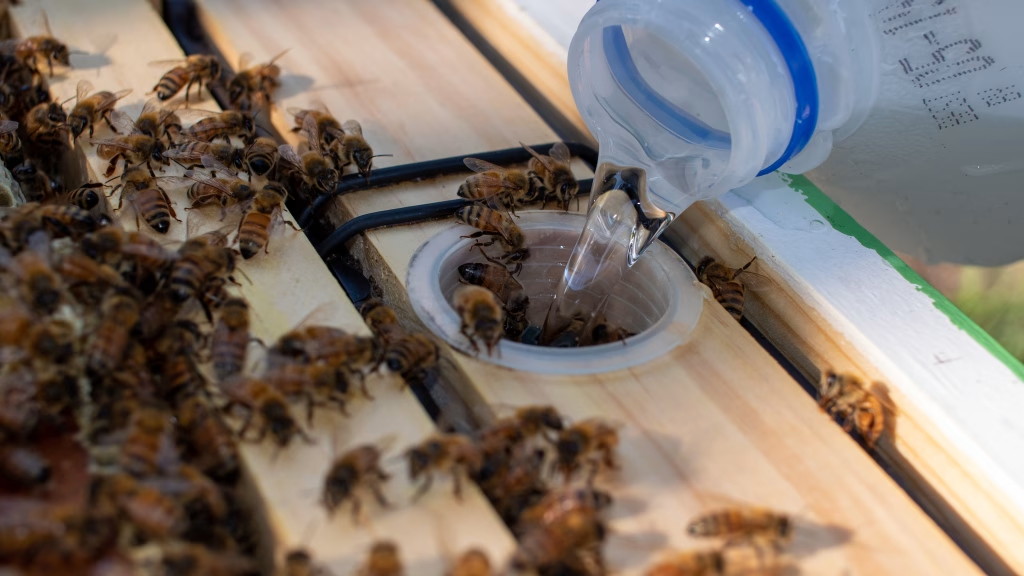
Last week of May—Check purchased nuc again and repeat frame movement. Under normal circumstances feeding can stop on both the purchased nuc and the parent colony. Feed the split nuc a half gallon of light syrup. Put a super on the parent colony. Treat both the split nuc and the purchased nuc with a strip of FormicPro each. Since the parent colony is making a new queen, the brood break will help control the mites.
First week of June—Check all colonies again. The purchased nuc should be about 75% full and ready for a second deep according to standard procedure. Treat with two strips of VarroxSan. The parent colony should get 3 or 4 strips. We will not inspect this hive yet. The new queen will not be mated and laying yet. The split nuc can get 1 strip of VarroxSan. Treat all hives with SuperDFM. If the super on the parent colony is filling up, add another super. (By the way, since this colony is not making brood yet, honey production will actually be enhanced.)
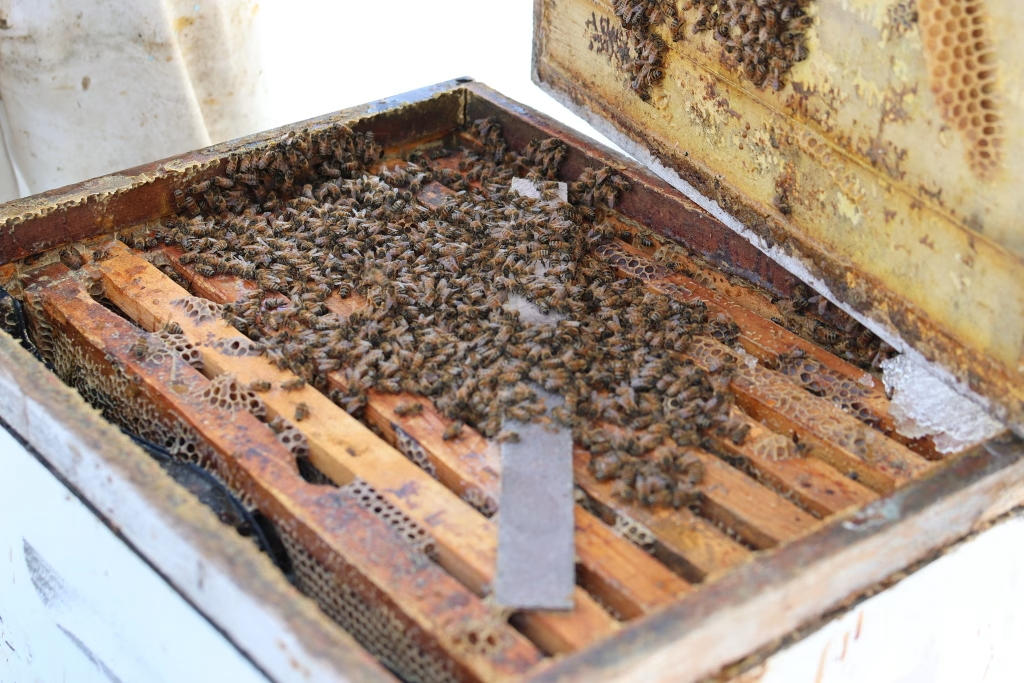
At least two weeks later—Check purchased nuc again and perform frame switching to promote growth. Check brood and perform remedial action if problems are evident. If not queenrite, get and install a new queen as soon as possible. The parent colony needs only checked for more super space. We will resist the urge to check for eggs quite yet. The queen might not be laying yet. Give another week. Feed the split nuc another half gallon.
One month after the split was made, check the parent colony for brood. If there are no eggs, we will consider purchasing and introducing a queen. Normal frame manipulation may be helpful on the split nuc.
Throughout June, check all hives at least every two weeks. Put a honey super on for space if needed.
End of June—If all has gone well the purchased nuc should need a super by this time. Add supers to parent colony as needed. The split nuc can most likely be transferred into a 10 frame box and fed a half gallon of light syrup. If desired, the split nuc can be brought back to home yard at night preferably before transferring to 10 frame box. Treat all hives with SuperDFM.
One week later—Keep checking on space on all hives and adding as needed. Manipulate frames inward in the split nuc to promote growth. Feed a half gallon on split nuc.
Mid July—do a light inspection to determine honeyflow, queenriteness, and overall health. Add space and perform any remedial action as needed. This does not need to be a full hive inspection.
Mid to end of July— Determine when the honey flow is over and pull all the honey on all hives that can be pulled. The only honey that should be left will be what is in frames containing brood and pollen. Extract honey and enjoy.
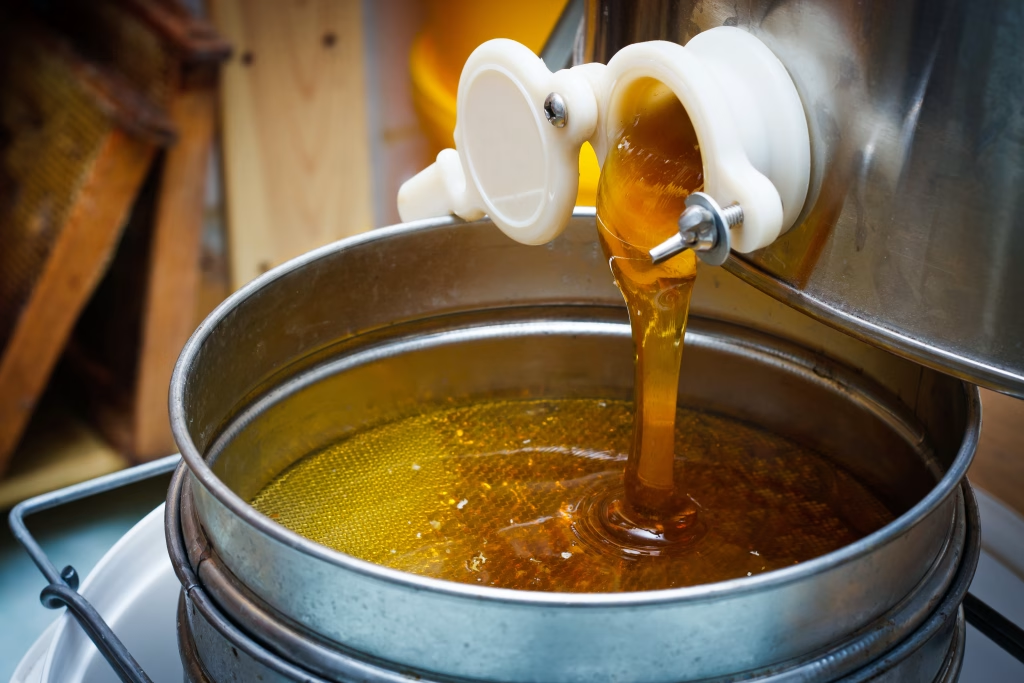
Preferably a day or two later—do an extensive hive inspection. On all colonies check every frame for signs of queenlessness, disease, spotty brood pattern, small hive beetle infestation, etc. Make management corrections as necessary and immediately. Perform mite rolls and treat if mite count is high. If queen is poor, requeen. Now for the excitement. This is an opportunity to perform the first step of the OTS queen rearing procedure (see www.mdasplitter.com for more information). When we find the queen in a colony we could put the queen with one frame of brood and bees in a nuc or we could simply kill the queen to force the parent and nucs to make a new queen. In any case, find rows of cells with larva that has just hatched and break down the cells under them without disturbing the larva. Do this on as many frames as possible. The nuc that was made in the spring can go through the same procedure if desired. Feed all colonies 1 gallon of light syrup.
One week later—go through all the hives on which the first step of OTS queen rearing procedure was performed. Make as many new nucs as queen cells and brood allows (at least 2 queen cells, two frames of brood and bees, 1 frame of resource in each. This will make more or less a total of 5). Imperative: Take all nucs at least 2 miles away (this time it’s not an option) and feed with 1 quart light syrup. Feed all parent colonies 1 gallon light syrup. Repeat religiously at one week intervals. Treat all colonies with SuperDFM at beginning of August.
Throughout August—feed all colonies religiously—per week feed half to one gallon to each parent colony and one quart to half gallon to the nucs made in July. You can’t overfeed a bee! As with mite control, we cannot skimp on this part of beekeeping.
End of August—(as early as temperatures allow) Do a light inspection for brood pattern and overall health. Treat any hives that queen was not killed with two strips of Formic Pro. All other hives in which the queen was killed should wait a little longer to allow the brood to establish. The break in the brood cycle will naturally reduce mites. By now some of the July nucs might be full. If we sell the nucs we can find the queen and pull a frames or two that does not have the queen on and add them to one of our parent colonies. If we are not going to sell, the nuc can be transferred to 10 frame boxes in the process of inspecting for mated queens.
Beginning of September—Treat all colonies with SuperDFM. Continue heavy feeding—one gallon per week.
Through September—Find a buyer to purchase the nucs made from the July splits. Assuming that one will not be saleable, there will be four that can be. Feed all unsold split nucs heavily and manipulate frames through the month of September to build all colonies. If they are not being sold they should achieve at least a full deep box before winter. More is better. Again, DO NOT skip these feedings under any circumstance. A pollen patty can be given occasionally to all hives to boost production. (For our financial figuring in these posts, we will figure that we sold all of the good nucs in the Jester EZNucs sometime in September.)
Mid September—Treat all requeened colonies with Formic Pro. Continue feeding heavily.
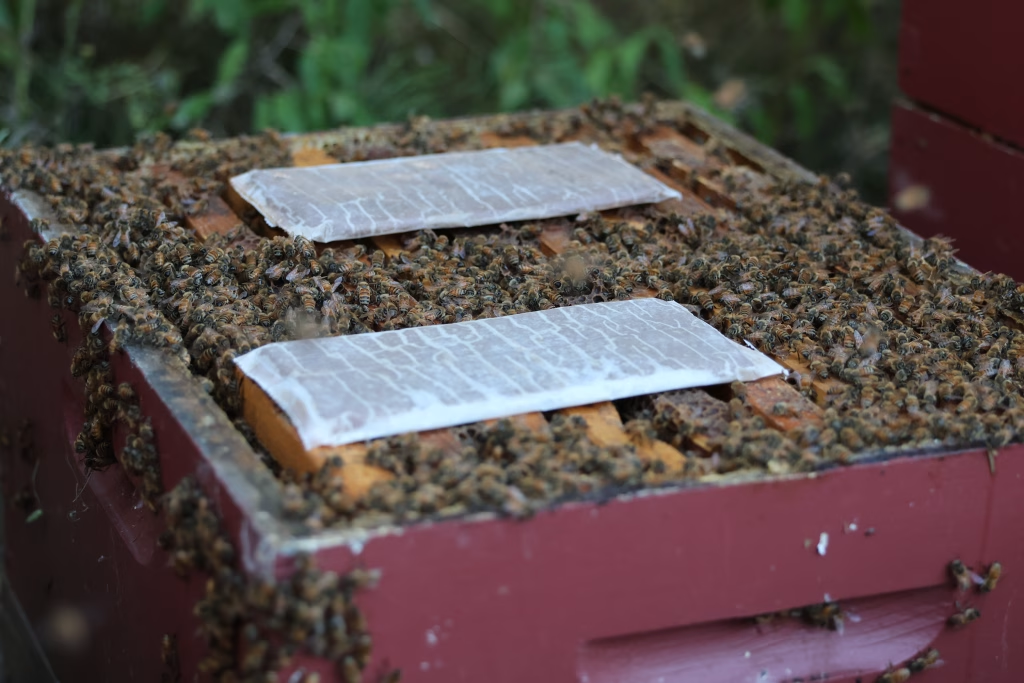
Beginning of October—Treat with SuperDFM.
Through October, religiously feed 1 gallon of heavy syrup every week. Again, DO NOT skip these feedings under any circumstance.
Last warm day of the season (watch the weather forecast)—Reduce hives to two deeps as much as possible. The unsold July split nucs might only be a single but with a new queen and lots of new bees they should be fine. Lightly inspect hives for queenriteness, brood, feed, and cluster size. It is difficult to do any remedial work now except to put on fondant or sugar bricks if the feed is not enough. If clusters are too small, do not risk trying to overwinter. Since they will probably not survive, we will unite them with stronger hives. Take losses in the fall. Syrup feeding stops.
Sometime around Thanksgiving treat with an oxalic vapor treatment.
Hives should be checked for feed at least once a month during January, February, and March. Place fondant patty or sugar brick over cluster it they have chimneyed to the top.
As with the first year, this procedure should give optimal survival and the greatest likelihood for financial success. Again, I’ll run the financial numbers for the second year based on this procedure and show profitability at the end of the second year in the next post.
Note: This procedure is assuming that we will end up with a minimum of three colonies going into the winter. Many hobby beekeepers don’t want to run that many colonies into the winter. Fine. Find someone to buy your July splits and excess colonies in September. Just keep in mind that colonies sold in the fall are not as valuable because the risks are higher for the buyer. It would seem prudent to keep at least three for the winter to mitigate your winter losses. You can always make splits and sell the extra in the spring. The primary objective is to avoid buying any more nucs in the spring and thereby achieve a self-sustaining hobby beekeeping project. If mite load has been kept low and feeding has been done well in late summer and fall we should be able to figure on at least two live colonies next spring.
-Jonathan Showalter | Beeline of Michigan
You must be logged in to post a comment.

Jgibsonpc says:
Great read! I am on my third year of beekeeping and have 3 of 4 hives that made it through winter in SW MI. My plan for this season is very similar to what you laid out here! Appreciate the insights, learned a lot!