No products in the cart.
Remember those two simple, essential, and far-reaching goals:
Let’s see how they should be working out right now, end of May.
Since conditions (location, climate, weather, floral source, state of colony, mite load, stressors) vary so much, it is difficult to present a simple manual of dos and don’ts with a trouble-shooting page or two to address all the needs and problems of your hive in real time.
However, there are some things to be doing right now that will diminish risks and increase long-term success (getting your bees through next winter).
What follows is a two-prong examination of caring for colonies at the end of May.
There are some similarities, but the differences make unique care situations.
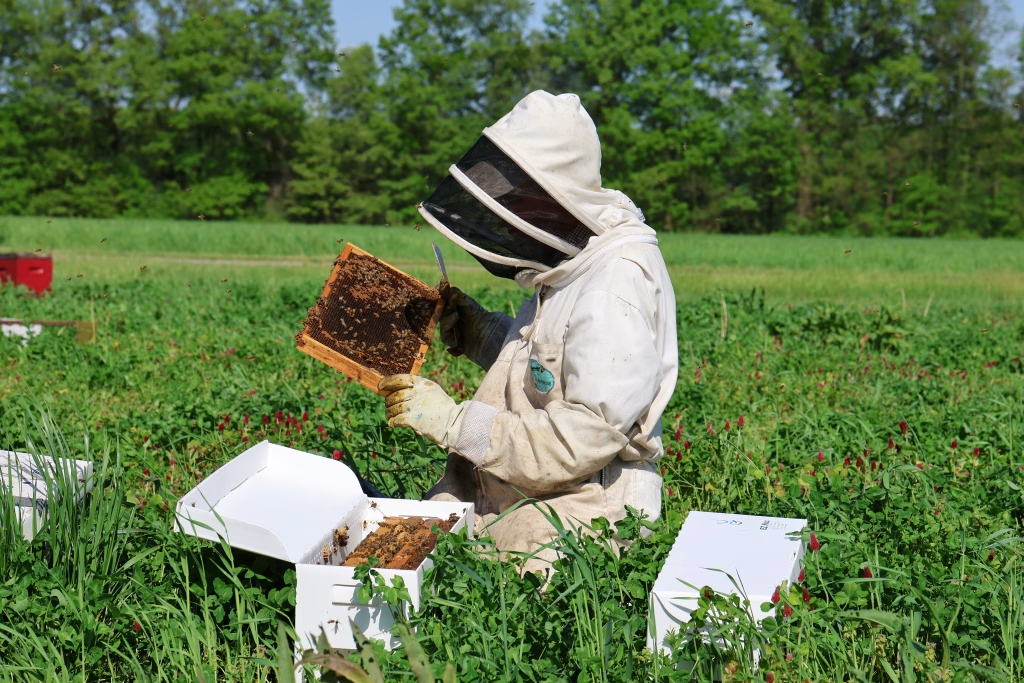
An overwintered colony has some significant advantages over colonies started this spring. Typically, they are going to be stronger, more vigorous, and hence ahead. By mid-April the worker population will be great enough and accompanied with sufficient drones to set the stage for swarming, something that will not happen with May starts (nucs, packages, or swarms). Special management during May, such as adding space (supers) and/or making splits that does not compromise health and honey production, can keep those overwintered colonies from swarming to some inaccessible tree or building.
But. But! BUT! With all the advantages of overwintered colonies there comes a significant disadvantage that is easy to overlook—heavier mite load. Even though a thorough mite regimen was followed the fall before which helped to enabled winter survival, there were, guaranteed, enough mites left to “seed” the survived colony. Since an overwintered colony has no early spring treatment or brood-break (a topic for another day) those mites get a head start, too, just like the bees they parasitize. This means that by the end of May the mite load is dangerously high—not high enough at this point to compromise the hive health, but high enough to set a trajectory for a compromised or collapsed colony by September or October. That is something you need to arrest, NOW!
Recommendation: If you haven’t already done so, get some Formic Pro or other effective mite treatment and get it on that overwintered hive ASAP (that stands for “as soon as possible). Just remember all your rules for applying in high temperatures and with honey supers on.
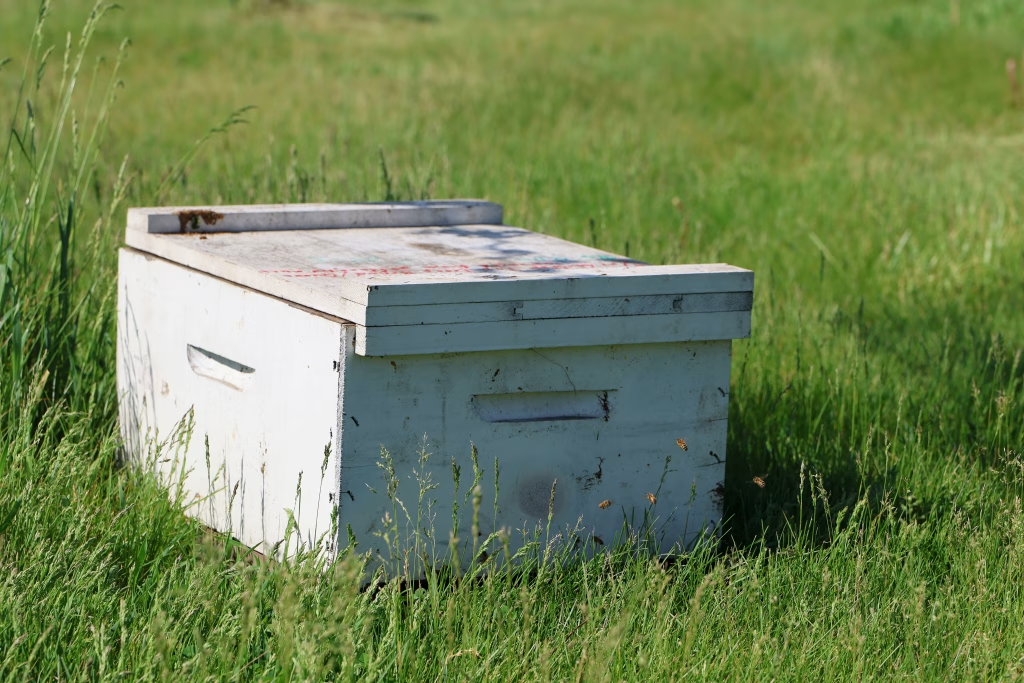
Prong two—spring starts (nucs, packages, swarms). Because treatments have usually been applied by the nuc or package producer and because a break in the brood cycle is usually a part of the production process, the mite load is low. However, the only good mite is a dead mite and to wait till July or August to do any treating is probably going to give the mites an undesirable advantage.
Recommendation: Same as an overwintered hive. However, it would be prudent to wait till it gets established a few weeks before you hit it with a potentially disruptive treatment. Here’s my suggestion: check your new hive every week to manage its expansion. Move an empty frame over into the active frames as bees fill them with new brood. Of course, keep your eyes open for signs of failed queens (good as nuc and package producers are, queens that looked good when they were sold to you can show up poor after a few weeks). When the first brood box has all but one frame full of brood, bees, and resource, add a second brood box (deep) and bring one or two frames of brood and bees up into that box (put empty frames in their place in the lower box). At this point, apply your mite treatment—preferably Formic Pro. If you acquired your nuc or package in early May, this will be about the beginning of June. Keep up your colony checks and management—about every two weeks. This will give a much-needed advantage on mite control.
And now for feeding. We usually think that feeding in the spring is not necessary because there is (usually) a heavy natural nectar flow. But, here in southwest Michigan, we just had a reminder that it is not always that way. After a couple weeks of really nice weather and a lot of blooming things (dandelion and autumn olive), it turned cool and wet. I mean really cool. Temperatures in the 50’s during the day and in the 40’s during the night. And it rained. Bees just don’t forage in that kind of climate. The cool rainy spell was less than a week long so the queen would have continued laying. Much longer than a week and she would have started to shut down. If there was not enough honey (or syrup) in those hives, they would have run great risk of starving.
Prolonged periods of non-foraging weather (too dry, too rainy, too cool, too cloudy) can lead to starvation and brood shutdown. Both must be avoided. Solution? You must feed. Be prepared with feed and an effective feeding method and then do it just as surely and religiously as you feed your cat or dog. It won’t hurt to open the hive long enough to pour some feed in the feeder and it will be worth the effort in the long run.
And, unlike dogs and cats and cows and sheep, you can’t overfeed a bee.
Happy beekeeping.
-Jonathan Showalter | Beeline of Michigan