No products in the cart.
Note: This is the second part in a series of posts that will appear over the next few weeks attempting to answer the question, “Can hobby beekeeping be financially successful?” Be sure to go back and read the March 7th post before digesting this one.
Part 2 puts the numbers to the first-year plan outlined in part 1 (the last post). This is built around the purchase of start-up equipment for two nucs and all that is required to manage, treat, and feed those two nucs for the first year. There will be no splitting during the first year and honey harvest will be minimal. We assume that the two colonies will thrive with the management regimen that part 1 outlines. A half-hearted, minimalistic, hands-off, uninvolved approach will most likely result in much less financial success. Of course. You get out of it what you put in. Also keep in mind that time is not figured. After all, this is a hobby and hobbies are typically considered recreation—time and effort spent on non-income producing activity for the purpose of rejuvenating soul and mind. So, we will keep a little of that element in our figures.
There are at least three ways to minimize the expense:
· Find a couple of swarms. This is definitely a good way to start a beekeeping career but takes some effort. We can’t put out bee boxes and expect a swarm to fly in. Swarm lure increases the possibilities but having a couple of frames of drawn comb helps a lot. However, being a new beekeeper, we don’t have that commodity. And we run the risk of going through the whole season and not have the good fortune of a swarm looking for a home. We could put our name and phone number out for swarm calls. Again, we run the risk of getting nothing. But, if successful, we could save $370.
· Purchase unassembled and unpainted equipment. And while we are at it we will get mill run grade (more knots and defects but just as effective for good beekeeping). Since Beeline offers no unassembled starter and hive kits we need to figure in the full price for smoker, suit, gloves, book, and assembled bottom boards. We’ll drop the entrance feeders because we will be purchasing inboard feeders anyway. This could shave off approximately $229. Just remember that this will take time to assemble and paint and will require tools and work area that we might not have.
· Mixing our own syrup. Figuring $.80/pound sugar from Walmart and 40 pounds for a 5-gallon pail of heavy syrup it will cost about $32 instead of the $69 (or more) for Turbo from Beeline. This saves approximately $148 for the season but then we have all the work, mess, and electricity (to heat the syrup while mixing) plus we don’t have all the other benefits of Turbo’s formulated mix.
Don’t, DON’T, DON’T under any condition try to save on treatment and feed! Winter survival and successful beekeeping do not need perfect bee boxes and paint jobs. But it does depend completely on keeping mite loads down and heavy feeding.
So, here are the numbers straight out of my spreadsheet:
Part 2 puts the numbers to the first-year plan outlined in part 1 (the last post). This is built around the purchase of start-up equipment for two nucs and all that is required to manage, treat, and feed those two nucs for the first year. There will be no splitting during the first year and honey harvest will be minimal. We assume that the two colonies will thrive with the management regimen that part 1 outlines. A half-hearted, minimalistic, hands-off, uninvolved approach will most likely result in much less financial success. Of course. You get out of it what you put in. Also keep in mind that time is not figured. After all, this is a hobby and hobbies are typically considered recreation—time and effort spent on non-income producing activity for the purpose of rejuvenating soul and mind. So, we will keep a little of that element in our figures.
There are at least three ways to minimize the expense:
· Find a couple of swarms. This is definitely a good way to start a beekeeping career but takes some effort. We can’t put out bee boxes and expect a swarm to fly in. Swarm lure increases the possibilities but having a couple of frames of drawn comb helps a lot. However, being a new beekeeper, we don’t have that commodity. And we run the risk of going through the whole season and not have the good fortune of a swarm looking for a home. We could put our name and phone number out for swarm calls. Again, we run the risk of getting nothing. But, if successful, we could save $370.
· Purchase unassembled and unpainted equipment. And while we are at it we will get mill run grade (more knots and defects but just as effective for good beekeeping). Since Beeline offers no unassembled starter and hive kits we need to figure in the full price for smoker, suit, gloves, book, and assembled bottom boards. We’ll drop the entrance feeders because we will be purchasing inboard feeders anyway. This could shave off approximately $229. Just remember that this will take time to assemble and paint and will require tools and work area that we might not have.
· Mixing our own syrup. Figuring $.80/pound sugar from Walmart and 40 pounds for a 5-gallon pail of heavy syrup it will cost about $32 instead of the $69 (or more) for Turbo from Beeline. This saves approximately $148 for the season but then we have all the work, mess, and electricity (to heat the syrup while mixing) plus we don’t have all the other benefits of Turbo’s formulated mix.
Don’t, DON’T, DON’T under any condition try to save on treatment and feed! Winter survival and successful beekeeping do not need perfect bee boxes and paint jobs. But it does depend completely on keeping mite loads down and heavy feeding.
So, here are the numbers straight out of my spreadsheet:
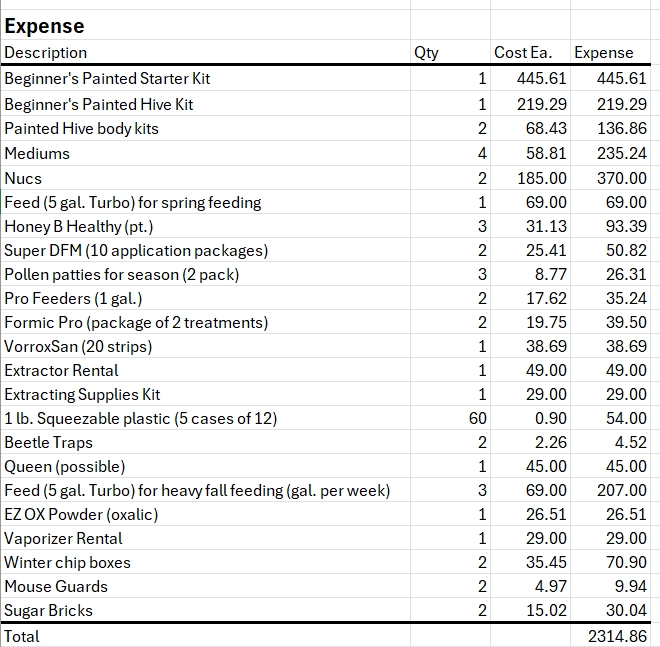
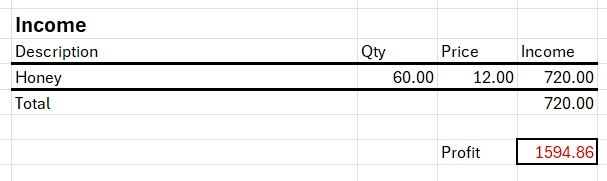
(That red profit number is negative.)
The honey harvest and amount of income from that is a bit nebulous. This all depends on pasture (flowers to gather nectar from) and weather (will the bees have fair weather to fly in?). It depends on how fast the bees build up from nucs. It depends on what we can sell honey for. In some localities we could get as much as $15 per pound and others might be less than $10. And maybe we will want to keep the honey for our own use and enjoyment which, I guess, is income because we don’t have to spend that money to buy it.
So. Not too bad for first year hobby. In the next two posts (yet this week, hopefully) we will do the same things for second year beekeeping and see where this thing goes.
-Jonathan Showalter | Beeline of Michigan